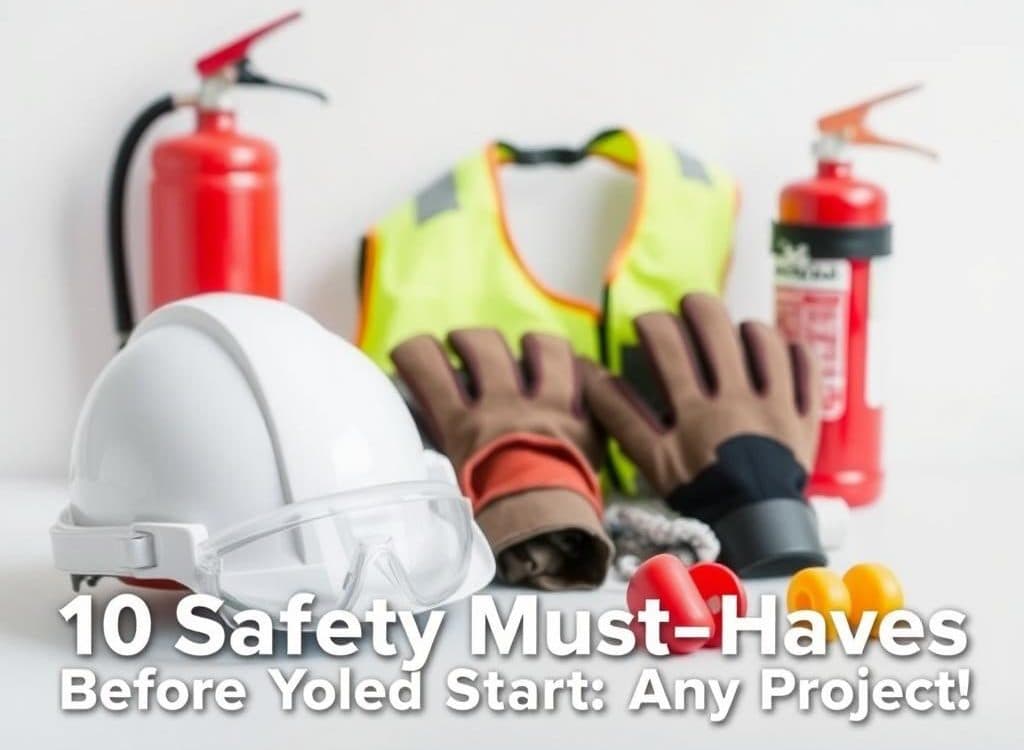
10 Safety Must-Haves Before You Start Any Project!
Before starting any project, I always think back to my home renovation. I was eager to begin, so I grabbed my tools and started tearing down walls. But soon, I realized I had no safety gear. The power saw was loud, and dust swirled around me.
This experience taught me the importance of safety gear. Without it, I risked injury and could have ruined the project. I learned that safety is key to a successful project.
Safety gear is our first defense against dangers. It helps us work safely and protects us from the unexpected. This article will cover the must-have safety gear and why it’s so important.
Key Takeaways
- Identify specific workplace dangers such as hazardous materials and heavy equipment.
- Create clear safety procedures including protective clothing protocols.
- Ensure employees know emergency exit routes and contact protocols.
- Regularly train employees in safety practices and ergonomics.
- Invest in essential safety equipment for various project scenarios.
- Encourage open communication regarding safety concerns among team members.
The Importance of Safety Gear on Any Project
Working on any project, like construction or industrial jobs, comes with big risks. Keeping everyone safe starts with the right protective gear. This includes Personal Protective Equipment (PPE) that acts as a shield against dangers.
Knowing what safety gear is out there and how it works can really help. It makes sure everyone is protected and work can go smoothly.
Understanding Personal Protective Equipment (PPE)
PPE is a wide range of gear made to keep workers safe from harm. Safety gloves, goggles, and masks are key in stopping cuts, chemical exposure, and dust. It’s important to pick high-quality PPE that fits the job.
Common Types of Safety Gear for Projects
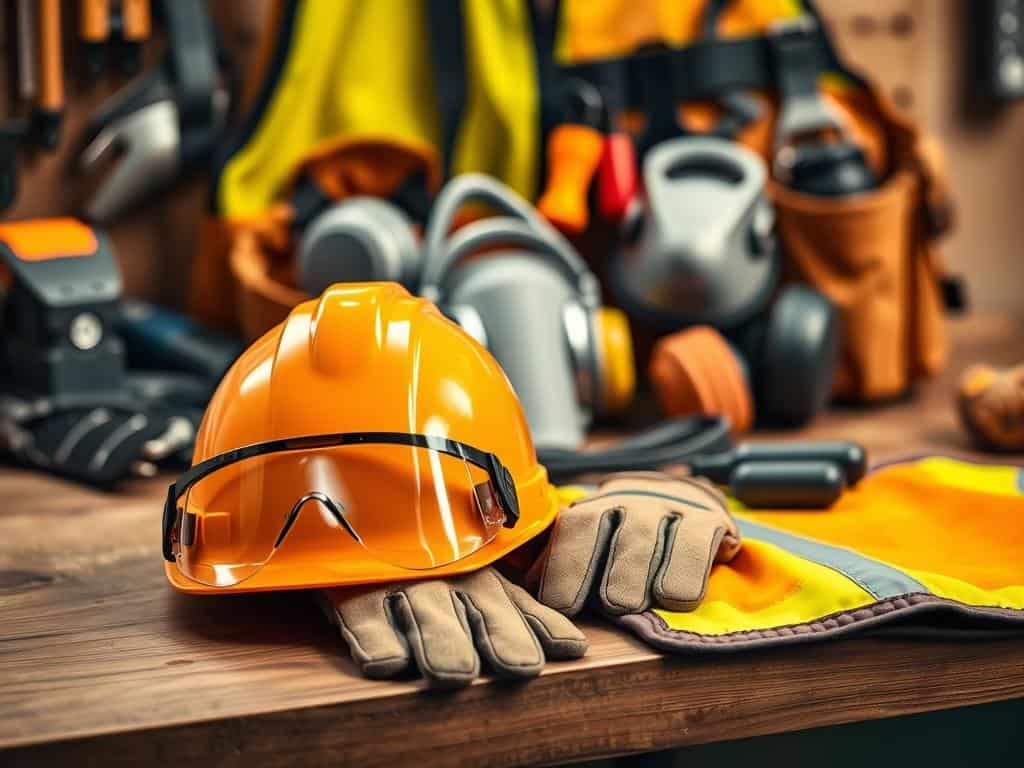
Hard hats and helmets are common for protecting against falling objects and electrical dangers. Safety goggles and face shields keep eyes safe from debris. Earplugs and earmuffs prevent hearing loss in loud places.
Respirators and masks, like N95, filter out harmful dust and fumes. Gloves protect hands from cuts, burns, and chemicals. Safety boots with steel toes and slip-resistant soles are key for foot safety. High-visibility vests help workers stay seen in dangerous spots.
Why Investing in Quality Safety Gear is Essential
Quality safety gear is a must for any project. Bad gear can cause serious injuries, leading to high medical bills and lost time. Good PPE not only protects better but also makes workers more confident and productive.
Statistics show that 67% of women in construction feel frustrated without gender-friendly safety gear. It’s clear we need better and more diverse safety equipment. Plus, learning how to use, maintain, and dispose of PPE is key. This ensures workers stay safe and do their jobs well.
Essential Safety Practices to Implement
Effective safety practices are key in any project. A systematic approach is vital to address all risks before they happen. The first step is a thorough hazard assessment.
This helps identify risks specific to the work environment. Then, I can set up the right safety measures.
Conducting a Hazard Assessment Before Starting
A detailed hazard assessment is needed before starting any project. It involves spotting major risks like working at heights and exposure to noise. This step helps me create safety protocols that meet OSHA standards.
It ensures the safety of all workers involved.
Establishing Safety Protocols and Emergency Procedures
After identifying hazards, setting up safety protocols and emergency procedures is next. I create site-specific safety plans for different scenarios. This includes how to handle equipment failure or accidents.
It’s also important to have clear signs for emergency exits and safety information. This helps workers navigate the site safely.
Regular Training and Communication with Your Team
Regular training is essential for a safe work environment. Keeping everyone informed about hazards and how to respond is key. In these sessions, I stress the importance of using personal protective equipment (PPE) correctly.
Utilizing Safety Gear Effectively on the Job
Using safety gear properly can greatly reduce accident risks. I make sure all workers have the right PPE, like hard hats and gloves. It’s important that PPE fits well and is maintained properly.
Regular checks on tools and machinery, along with training on fall protection, are also necessary. This helps lower risks.
Conclusion
Investing in quality safety gear and essential safety practices is key. It’s not just about following rules; it’s about keeping employees safe. Many workplace accidents happen because of poor safety measures.
Creating a culture of safety is essential. Choosing the right safety equipment for each industry’s hazards helps prevent accidents. This way, I can help make workplaces safer.
The right Personal Protective Equipment (PPE) is comfortable, works well, and lasts long. When workers trust their safety gear, they use it right. It’s important to offer regular training and check equipment to keep it up to date.
This approach makes workplaces safer and can improve a company’s image. It leads to a more productive work environment.
Staying updated on safety is vital. By doing so, I can help prevent accidents and create a safe work culture. This commitment is important for the success of projects and keeping workplaces safe.

Leave a Reply
You must be logged in to post a comment.