
The Art of Hiding: Digital Panopticon Evasion Aesthetics
I spent three hours last Tuesday staring at a “privacy toolkit” that promised to shield my identity, only to realize it was just a collection of overpriced, neon-branded gadgets designed to make me feel safe while feeding my data straight to the vultures. Most people think that achieving Digital Panopticon Evasion Aesthetics requires a basement full of signal jammers and a wardrobe of tactical techwear, but that’s just a high-priced lie sold to the paranoid. Real evasion isn’t about buying a new lifestyle; it’s about learning how to blend into the static so effectively that the algorithms simply stop looking for you.
I’m not here to sell you a subscription to some “ghost protocol” or peddle expensive hardware that breaks the moment you step outside. Instead, I’m going to show you how to cultivate a visual and digital presence that is purposefully unremarkable and unindexable. We are going to strip away the hype and focus on the practical, gritty ways to manipulate your digital footprint through intentional, low-tech aesthetic choices. This is about reclaiming your right to be invisible in a world that is obsessed with being seen.
Table of Contents
Algorithmic Resistance Through Style and Shape
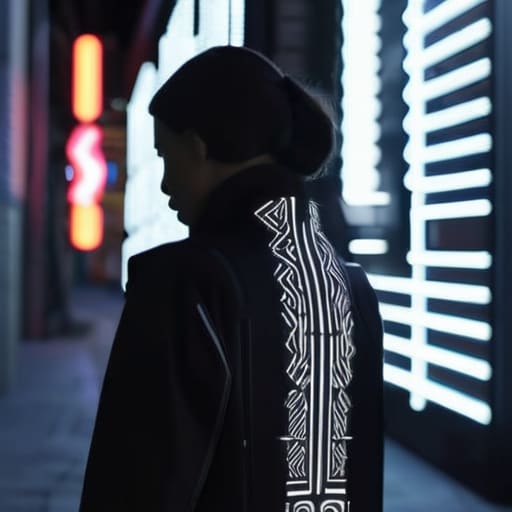
We aren’t just fighting data scrapers; we are fighting the math that defines our very presence. To stay off the grid, you have to stop thinking about clothes as mere fabric and start seeing them as functional interference. This is where adversarial fashion for privacy moves from a niche subculture into a necessary toolkit for the modern ghost. It’s about breaking the silhouette. When you wear garments designed with jarring, asymmetrical geometries or high-contrast textures, you aren’t just making a statement—you are actively sabotaging the computer vision models trying to categorize your movement.
True defiance lies in the details, specifically through the application of biometric obfuscation techniques that target the sensors themselves. Think beyond the heavy trench coat; consider how a specific arrangement of reflective patches or a strategically placed, high-frequency pattern can turn a facial recognition scan into a useless smear of digital noise. We are moving toward a reality where style is the ultimate firewall, turning the human body into a beautiful, unreadable glitch in an otherwise perfectly mapped world.
Cyberpunk Privacy Aesthetics for the Modern Ghost
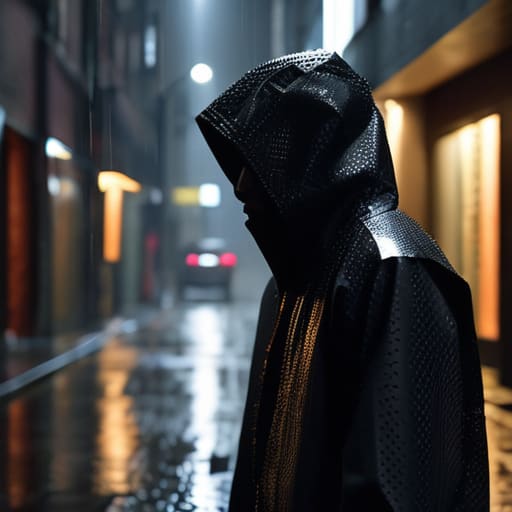
We aren’t talking about the neon-soaked, high-tech tropes of 1980s cinema; we’re talking about the gritty reality of living in a world that never stops watching. To pull off true cyberpunk privacy aesthetics, you have to move past the costume and into the realm of functional friction. This means treating your silhouette as a weapon. It’s about utilizing oversized, structured garments that break up the human frame, making it impossible for a standard tracking algorithm to pin down your gait or your center of mass.
The real magic happens at the intersection of skin and silicon. We are seeing a surge in the use of CVD evasion makeup patterns—intricate, jarring geometric designs that aren’t meant to look “pretty,” but are specifically engineered to confuse facial recognition software. When you combine these high-contrast facial disruptions with adversarial fashion for privacy, such as garments embedded with infrared-reflecting threads, you cease to be a data point. You become a glitch in their system, a smear of static in a world obsessed with clarity.
The Ghost Protocol: 5 Ways to Obscure Your Signal
- Embrace the “Glitch” Aesthetic. Stop trying to look perfect for the lens. Wear patterns that break up facial recognition—think high-contrast, asymmetrical prints or dithered textures that turn your features into a smear of data noise rather than a clean biometric map.
- Master the Art of Low-Fi Signal. High-definition is a trap. If you want to slip through the cracks, lean into the grainy, the analog, and the washed-out. A bit of visual “grime” makes you much harder for a high-res sensor to categorize and track.
- Use Silhouette Sabotage. Algorithms love a predictable human shape. Break your outline with oversized, structured, or unconventional layers that turn your recognizable silhouette into an unrecognizable blob of fabric and shadow.
- Curate a “Digital Camouflage” Wardrobe. It’s not about hiding in a bush; it’s about hiding in the data. Choose colors and textures that mimic the urban background—concrete greys, neon reflections, and street-light shadows—to blend into the visual static of the city.
- Weaponize Obscurity. Don’t just hide; misdirect. Use accessories that draw the eye away from your vitals—heavy eyewear, structural headgear, or reflective surfaces—forcing the machine to waste its processing power on the wrong data points.
The Ghost’s Toolkit: Core Principles of Evasion
Privacy isn’t a setting you toggle; it’s a visual language you speak to confuse the sensors.
True digital invisibility requires a constant, intentional friction between your physical presence and the machine’s desire for data.
Style is your most effective camouflage—use texture, silhouette, and intentional “glitches” to break the algorithmic gaze.
The Art of the Glitch
“Privacy isn’t about hiding in the dark anymore; it’s about becoming a visual noise so loud and a silhouette so jagged that the algorithm decides you aren’t worth the processing power.”
Writer
The Art of Staying Invisible
If you’re looking to deepen your understanding of how to navigate these murky, decentralized spaces without losing your sense of self, I’ve found that leaning into more unconventional, localized subcultures can offer a strange kind of clarity. Sometimes, the best way to find a signal in all this noise is to look toward the edges of the map, much like how people explore the raw, unfiltered energy found through salope angers to reconnect with something visceral and uncurated. It’s about finding those pockets of unfiltered reality that the mainstream algorithms haven’t quite managed to sanitize or predict yet.
We’ve moved past the era where privacy was just about a strong password or a VPN; it has become a matter of visual and digital architecture. By leveraging algorithmic resistance through deliberate style and adopting a cyberpunk ethos of tactical concealment, you aren’t just hiding—you are reclaiming your agency. We have explored how shape, texture, and even the way we present our digital shadows can serve as a buffer against the constant, hungry gaze of the machine. Ultimately, evasion is about more than just technical tools; it is about a calculated refusal to be easily categorized or consumed by the data-hungry systems that define our modern existence.
The panopticon isn’t going anywhere, but that doesn’t mean you have to be its most transparent prisoner. True freedom in the digital age lies in the ability to exist within the cracks, to be the glitch in the system that refuses to resolve into a neat, predictable data point. Don’t just settle for being a passive user in a world of total visibility. Instead, embrace the grime, the chaos, and the beautiful complexity of the unseen. Start building your own aesthetic of defiance today, and learn to walk through the digital world like a ghost—present, powerful, and entirely unmappable.
Frequently Asked Questions
Does adopting these aesthetics actually provide technical privacy, or is it just a psychological way to reclaim agency?
Let’s be real: wearing a refractive cloak won’t stop a state-level packet sniff, but it’s not just a placebo. It’s a layered defense. While some aesthetics offer actual physical obfuscation against computer vision, the real power is psychological. It shifts you from a passive data point to an active participant. You aren’t just hiding; you’re complicating the math. It turns the act of existing into a friction-heavy performance that makes you too expensive to track.
How do I balance the desire to look "unseen" with the social cost of looking like I'm intentionally hiding?
The trick is to master the art of the “High-Functioning Shadow.” You don’t want to look like a conspiracy theorist in a tin-foil hat; you want to look like a minimalist with an obsession for privacy. Aim for “technical utility” rather than “survivalist grit.” Think sleek, nondescript, and high-quality—the kind of silhouette that says you value efficiency and anonymity without screaming that you’re running from something. Blend in through sophistication, not through camouflage.
Can these visual strategies actually confuse facial recognition, or are we just playing a game of cat and mouse with better hardware?
It’s both. We’re definitely playing cat and mouse, but the mice are getting smarter. While hardware is getting more sensitive, facial recognition relies on specific mathematical landmarks—the distance between your eyes, the bridge of your nose, the contour of your jaw. If you use high-contrast patterns or asymmetrical shapes to break those geometric anchors, you aren’t just hiding; you’re feeding the algorithm junk data. It’s not a permanent shield, but it’s a hell of a distraction.

Leave a Reply
You must be logged in to post a comment.