How to Set Up the Ultimate DIY Workshop!
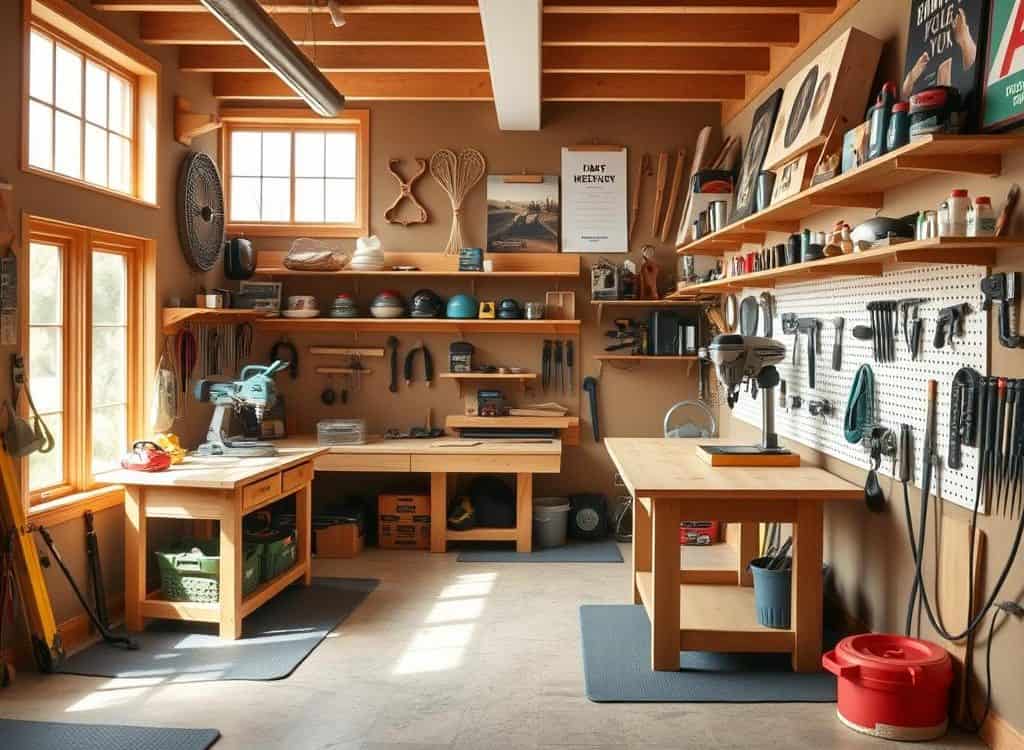
Every great DIY project starts with a dream and a dedicated space. I remember turning my messy garage into a DIY workshop. It was a typical Sunday afternoon when I saw an old chair that needed a makeover.
Looking around, I saw tools scattered, spare wood piled high, and no clear space. It hit me: I wasn’t just making a chair; I was missing out on creating my own efficient workspace.
Determined to create a workshop, I started learning about workshop setup. I planned the layout, chose the right tools, and found effective storage solutions. A home workshop is more than a place to work—it’s a sanctuary for creativity and productivity.
Whether you’re a seasoned woodworker or a weekend warrior, setting up the ultimate DIY workshop will enhance your projects. It will also deepen your love for crafting. Let’s explore how to turn that cluttered space into an inspiring hub of creativity.
Key Takeaways
- Creating a workshop requires careful planning and effective space management.
- Starting small can be beneficial for building initial woodworking skills.
- Storage solutions are essential for maintaining an organized workshop.
- A quality workbench is the heart of any DIY workshop.
- Regular cleaning routines keep the workspace functional and inviting.
- Prioritize tools based on your projects to optimize your workshop setup.
Understanding Space Planning for Your Workshop
Space planning is key when setting up a workshop. A good size and layout boost productivity and ease. I find that having areas for cutting, assembly, and finishing helps a lot.
Designating spots for each task cuts down on moving around. This lets me concentrate on my work better.
Importance of Size and Layout
Finding the right workshop size is essential. Spending time on the floor plan makes it both useful and efficient. Using wall shelves and pegboards saves space.
I organize tools and materials well, labeling everything. This makes projects faster and more efficient.
Traffic Flow and Accessibility
Good traffic flow and accessibility are important in workshop design. A bad layout can cause problems and safety risks. I use mobile workstations that can change with the project.
This flexibility helps me move smoothly between tasks. Good lighting and air also make the space safer and nicer to work in.
Optimal Organization for a Functional Workshop Setup
Effective organization is key to a functional workspace. An organized workshop boosts efficiency and productivity. I focus on using the right storage and planning tool arrangement.
Storage Solutions
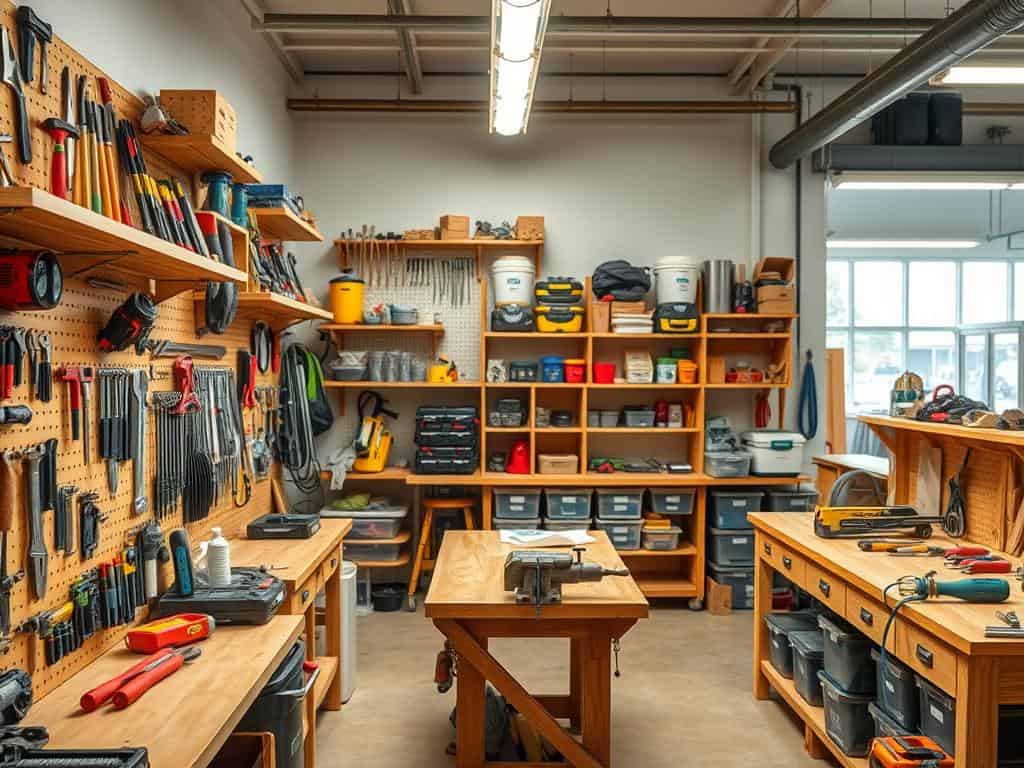
First, I remove tools, materials, or equipment I don’t need. I sort items into groups like hand tools, power tools, fasteners, and paints. This helps me choose the best way to organize.
I use a pegboard to make the most of vertical space. It also helps me keep often-used tools in sight. I add baskets, magnetic strips, tool hooks, and shelves to keep everything in order.
Essential Tool Arrangement
Arranging tools well is vital for a smooth workflow. My workbench is about 34 inches high and 30 inches deep, perfect for my tasks. It’s important to have a special area for power tools.
This area should have enough room to move around and be close to electrical outlets. I also have a dedicated area for finishing, where I store supplies neatly. Keeping tools and the workspace in good shape is essential for future projects.
Key Tools and Equipment for Your DIY Workshop
Setting up a DIY workshop needs careful thought about the right tools and equipment. I focus on picking the best machinery and dust collection systems for safety and efficiency. Knowing how to choose the right equipment is key to quality work.
Choosing the Right Machinery
For me, choosing machinery starts with the Miter Saw, like the Makita LS1040. It’s perfect for precise cuts. Other essential tools include the DEWALT DW618PKB Router Combo and the RIDGID 15 Amp Circular Saw. I also use the PORTER-CABLE 382 Sander for smooth finishes and the Dremel MM30-04 Oscillating Tool for various tasks.
Reliable clamps, like Bessey clamps, keep my projects secure. Having a drill press and a strong shop vacuum, like the RIDGID 12 Gal. Wet Dry Vac, helps keep my workspace clean. Safety is also a priority, with barriers and GFCI receptacles preventing accidents. The tools I’ve chosen make each project easier and more fun.
Dust Collection Systems
Dust collection systems are vital for clean air in my workshop. I use 4-inch ducting and motors of 1.5 HP to 2 HP for effective dust removal. Blast gates help control dust flow from multiple machines, keeping my space clear.
I also have wall-mounted cabinets and pegboards for tool organization. My workbench has tool recesses and adjustable height for comfort and function. Using 220V circuits for heavy machines and fluorescent lights for illumination makes my workshop ideal for DIY projects.
Conclusion
Setting up the ultimate DIY workshop is a rewarding journey. It starts with careful planning and grows into a place of creativity and productivity. I found that organizing well and choosing the right tools are key to being efficient.
My workspace has become a source of inspiration for my projects. This is thanks to focusing on space planning and tool arrangement. Even if my workshop isn’t perfect at first, making changes helps a lot.
Using methods like Dragon Dreaming helps me stay on track. Every update, like better dust collection or storage, makes working on DIY projects more fun.
The success of my workshop also depends on working well with others. By planning together, I create a space that’s not just for me but for everyone. This ongoing process keeps my workshop growing and improving.

Leave a Reply
You must be logged in to post a comment.