
How to Build the Ultimate DIY Workbench!
Turning a messy garage into a tidy workshop is incredibly rewarding. I once stood in my garage, surrounded by tools, lumber, and unfinished projects. It was clear that a solid, functional workspace was key to better efficiency and enjoyment of DIY hobbies.
This insight led me to build the ultimate DIY workbench. It would change how I approached projects. With the right materials and tools, I learned to create this masterpiece. It made my garage tools more accessible and efficient.
Join me as I guide you through building an ultimate workbench tailored to your needs!
Key Takeaways
- A well-designed workbench enhances project efficiency and organization.
- Using adjustable feet allows for easy leveling on uneven surfaces.
- Implementing cubbies with shelves creates versatile storage options.
- Installing a bench vise and downdraft table increases functionality.
- Accurate measurements and labeling ensure precise builds.
Why You Need a DIY Workbench in Your Workspace
A DIY workbench is key to a better workspace. It’s not just for organizing; it changes how you do DIY projects. A workbench made for you means your tools are always ready, making work faster and more efficient.
Enhancing Functionality in Your Garage Tools Setup
A good DIY workbench has storage like drawers and shelves. This keeps your tools in order and within reach. It also prevents tools from moving around, making your work better.
Adjustable height is important for comfort and to avoid back pain. A well-made workbench can be set to fit your needs perfectly.
Increased Efficiency for DIY Projects
Features like built-in vises make hard tasks easier. A strong workbench can handle big projects without issues. Building a workbench yourself can save money and boost your creativity.
By mixing DIY and store-bought parts, you can get a great workbench without too much work. This way, you can focus on your projects, not the bench.
Materials and Tools Required for Your DIY Workbench
Building a DIY workbench requires choosing the right materials and tools. This ensures it meets your needs and lasts long. The right materials and tools are key to a successful build.
Choosing the Right Wood for Durability
There are many wood options for a workbench, each with its own cost and durability. I often choose 2-in x 4-in lumber for its balance of cost and strength. For even more durability, 2-in x 8-in lumber is a good option.
Plywood is also a cost-effective choice, perfect for shelves. It offers a good level of durability. The right wood depends on your project’s needs.
Essential Garage Tools for Construction
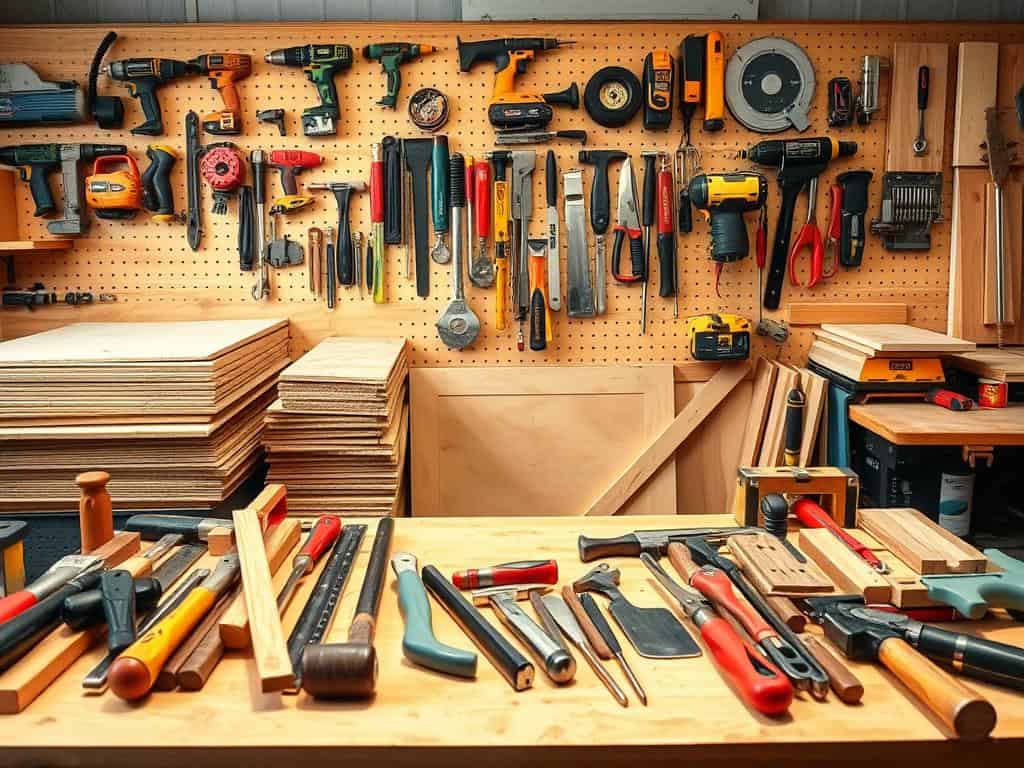
Having the right tools is essential for building a workbench. I use a power mitre box saw for precise cuts and a cordless drill for fastening. A tape measure ensures my cuts are accurate.
A circular saw helps with cutting larger pieces. Clamps keep materials in place. Safety gear like goggles and a face mask is also important.
Recommended Hardware for Stability
Stability is critical for a DIY workbench. I use quality hardware like coarse thread drywall screws for strong connections. Steel angle brackets add extra support at joints.
Carriage bolts help keep the work surface stable, preventing wobbling. The right hardware ensures a solid structure.
Step-by-Step Guide to Building Your DIY Workbench
Building a DIY workbench needs careful planning and execution. This guide helps you build a sturdy workbench for your needs. It covers the basics, from measuring wood to installing shelves, for a smooth build.
Measuring and Cutting the Wood
The first step is accurate measurements. I make a cut list for the legs, frame sides, and shelves. For example, cutting four legs to 36 inches provides solid support.
I use a circular saw for main cuts and a miter saw for detailed cuts. Having a tape measure, speed square, and pencil helps me mark the wood accurately.
Assembling the Frame and Top
Then, I focus on building the frame and attaching the top. I use 2x4s for the frame, attaching sides and front with 2 ½” screws. Clamps keep everything in place while I drill the screws.
After the frame is set, I add a 3/4″ particleboard or plywood sheet for the tabletop. A level ensures everything is aligned correctly, making the workspace functional.
Installing Shelves and Additional Features
With the frame and top done, I install shelves. I use 2x4s and particleboard for a bottom shelf, adding storage and improving tool access. Features like a vise can also be added here.
Reinforcing the workbench with all-threaded rods allows for height and stability adjustments. This completes the workbench, making it durable and long-lasting.
Conclusion
Building my ultimate DIY workbench has greatly improved my workspace. It has also organized my garage tools, making it a key part of my DIY projects. The construction process let me tailor the bench to fit my needs, making it both simple and strong.
The materials I chose, along with essential tools, have made a durable work surface. This surface is something I can count on for years.
While the castor wheels make moving the bench easy, I’ve noticed a slight slack when locked. This can be a problem for precise woodworking tasks. If you do fine woodworking, you might want to remove the wheels or get retractable ones for better stability.
Despite this, the benefits of a well-made workbench are huge. It boosts creativity and gives me a dedicated space for crafting.
This project has been very rewarding. It has not only improved my workspace but also made me more efficient in DIY tasks. As I get better at woodworking, I’m excited to keep improving my workbench. It’s a long-term investment in my craft.

Leave a Reply
You must be logged in to post a comment.