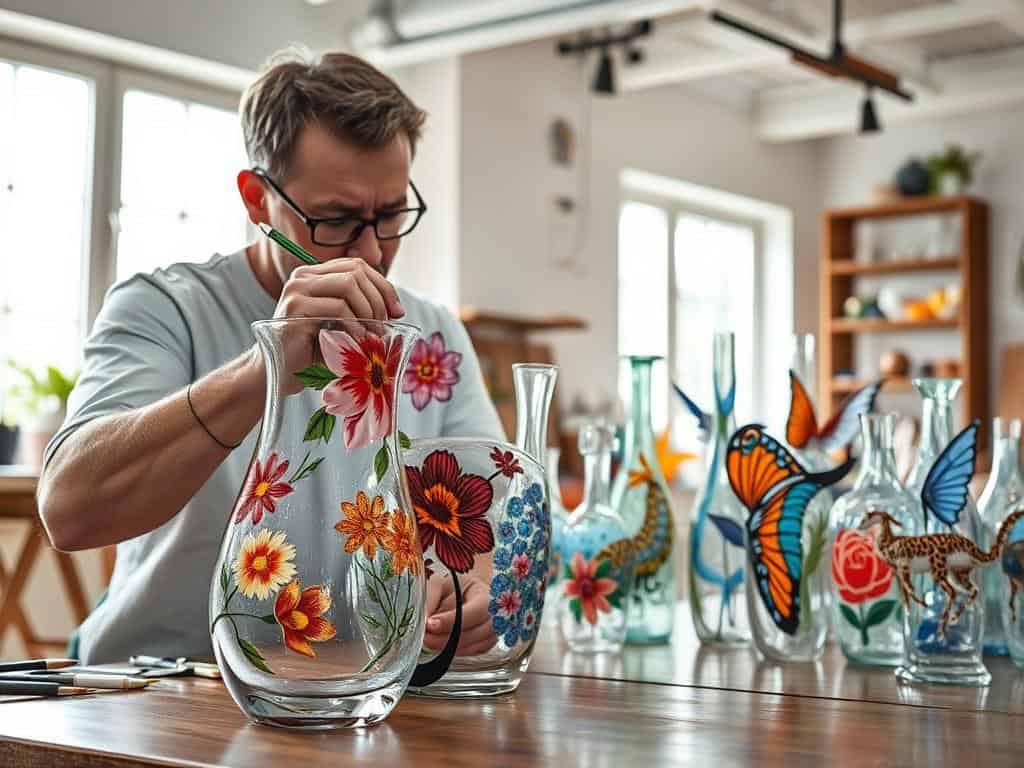
How to Paint Glass Like a Pro (DIY Guide!)
Did you know glass painting can make ordinary glass into art, boosting its value by over 30%? It’s not just for decoration; it’s a creative way to improve your home with special pieces. In this guide, I’ll cover everything about glass painting, from picking the right materials to mastering techniques.
In this DIY guide, I’ll show you how to make beautiful glass art. Whether you’re new to DIY glass art or want to get better, you’re in the right spot. Get ready to dive into the world of hand-painted decor with stunning bottles, glassware, and designs!
Key Takeaways
- Glass painting can significantly enhance the aesthetic and value of glass items.
- High-quality supplies, like FolkArt Enamels and quality brushes, yield better results.
- Using paint pens, spouncers, and a craft knife aids in achieving detailed designs.
- For easier cleanup, consider using a paint tray during the painting process.
- Stencil tape can help create professional patterns and designs.
- Preparation of the glass surface is key for a lasting finish.
- Combining colors and trying new techniques can lead to unique glass art pieces.
Introduction to Glass Painting
Glass painting has a long history, starting in the 12th century during the Gothic period in Europe. It turned decorative and functional glass into beautiful pieces that tell stories and evoke emotions. This art form combines artistry and practicality, adding joy and beauty to everyday items.
What is Glass Painting?
Glass painting is about painting on glass surfaces to create stunning art. It can have simple or complex designs, making it fun for everyone. Artists use techniques like reverse glass painting, where they paint details first and then add base colors.
This method is popular in places like Romania and Austria, showing the art’s diversity.
Why Paint Glass?
Many people paint glass because it lets them express themselves. It’s a way to make unique, personalized items. It also adds style to homes and can make everyday objects special.
It’s not just for looks; it’s also practical. For example, it can turn plain dishes into memorable table settings. Glass painting can also give new life to old glass items, making them functional and meaningful.
Common Uses for Glass Painting
Glass painting has many uses. It’s great for making personalized gifts or beautiful home decor. It’s perfect for special occasions like weddings or anniversaries, creating keepsakes that last.
Decorative glass panels can make any room look better. Painted windowpanes are a creative way to solve privacy issues. Glass painting offers endless possibilities for creativity.
Essential Supplies for Glass Painting
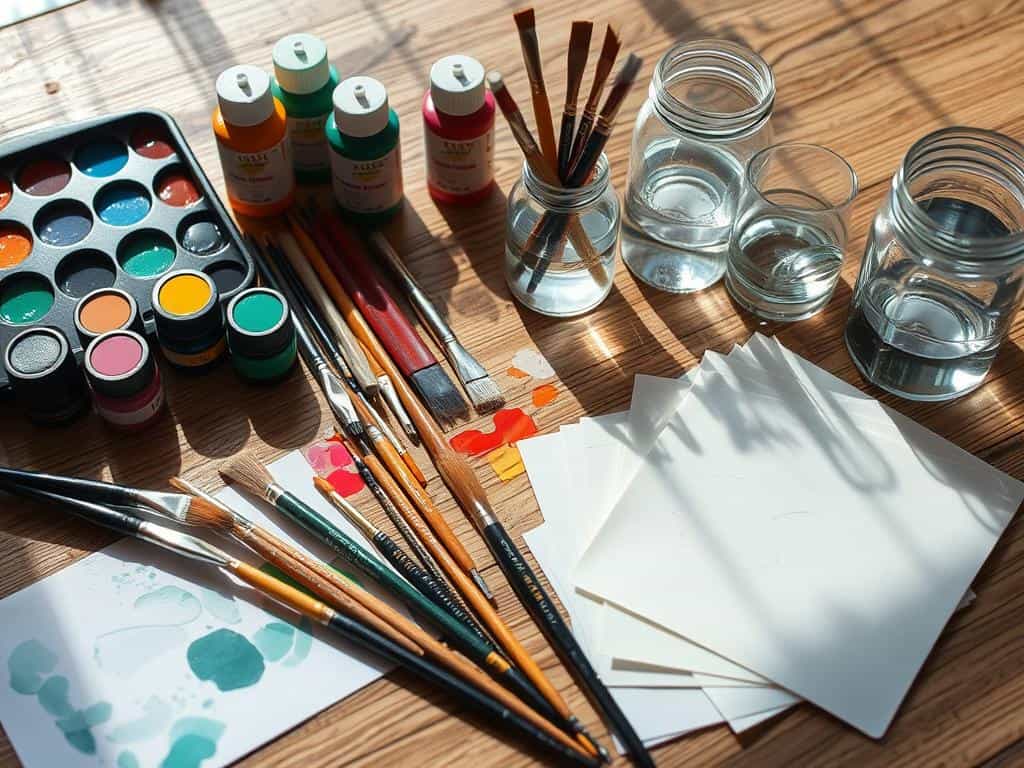
Starting a glass painting project? You need the right supplies for top-notch results. I make sure to have all the glass supplies, paints, tools, and cleaning stuff. Knowing what you need makes painting easier and more fun.
Types of Glass Paints
Choosing the right glass paints is key. Transparent paints let light through, creating beautiful stained glass looks. Opaque paints block light, great for detailed designs. Enamel paints, like FolkArt Enamels, are durable and shiny, perfect for decorative items.
Tools and Brushes Required
The right tools are vital for great results. I pick brushes that match my paint and design. Soft brushes avoid streaks, and foam spouncers spread paint evenly. For small details, styluses or Pebeo Vitrea 160 Paint Markers are a must. A sealant keeps your artwork looking new for longer.
Cleaning and Preparing Your Glass Surface
Preparing the glass is just as important. I start with warm, soapy water to clean off dirt and grease. Then, rubbing alcohol or vinegar removes oils. Testing paints on spare glass helps you get the hang of it. Clean glass ensures paint sticks well and lasts longer.
Step-by-Step Guide to Glass Painting
Starting your glass painting journey is exciting. It brings color and creativity to your space. I’ll guide you through each step, from preparation to curing. Each step needs care for a beautiful finish.
Preparing the Surface for Painting
Clean the glass surface well to remove dust or grease. I use isopropyl alcohol or nail polish remover with a cotton cloth. Let the glass dry completely before the next step. Good surface prep is key for paint success.
Choosing Your Design and Taping Off Areas
Pick a design that fits your style. Simple patterns are great for beginners. Use Plaid Gallery Glass Liquid Leading to outline your design. Let it dry for at least twelve hours.
For clean edges, use stencil tape. This ensures your design stays sharp.
Applying the Paint to Glass
Now, it’s time to paint. Choose colors from Plaid Gallery Glass Acrylic Paint. Test them on small glass pieces first. Use toothpicks to apply paint, spreading it evenly.
Be patient. Let the paint dry for twelve hours. This step is important for adhesion.
Curing and Caring for Your Painted Glass
After drying, curing is essential for lasting results. The curing method depends on the paint. Some need air drying for weeks, others baking.
After curing, follow care tips. Wash by hand or use the top dishwasher shelf. This keeps your artwork looking great.
Conclusion
Starting a glass painting project is more than a DIY task. It’s a fun journey where you can show off your creativity. This guide has given you the key techniques and tips to spark your artistic side. With the right supplies and careful methods, you can make any glass item into a beautiful piece of art.
Don’t be afraid to try new styles and ideas as you dive into this craft. I’ve found that the fun is in the making, not just the end result. You can create both useful items and beautiful decorations that show off your unique style.
If you want to get better or need help, think about contacting experts like Jeff Schultz Painting. With hard work and practice, you can become great at glass painting. So, get your supplies ready and start making those glass surfaces into stunning works of art!

Leave a Reply
You must be logged in to post a comment.