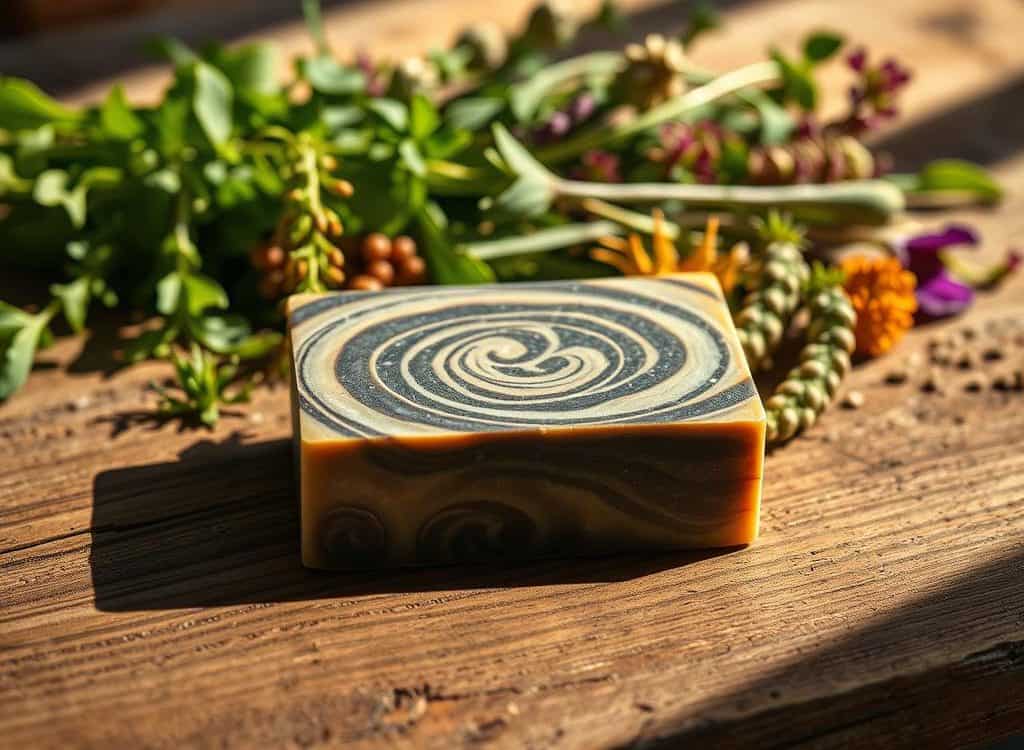
The Ultimate Guide to Making Handmade Soaps at Home!
Did you know the handmade soap market has grown over 30% in recent years? This growth shows more people want to make their own soap. Making soap at home lets you choose what goes into it, avoiding harsh chemicals. It’s a fun way to take care of your skin and be creative.
This guide will help you understand how to make handmade soap safely. It’s perfect for beginners or those looking to improve their skills. You’ll learn everything you need to know to make your own soap.
Key Takeaways
- Handmade soap is witnessing significant growth, showing a rise in natural product customization.
- Essential tools include a digital scale, safety gear, and measuring equipment.
- Using protective gear and working in a ventilated area is key when handling lye.
- Key ingredients like coconut oil and essential oils can improve your soap’s quality.
- Recording your soap-making process can help you get better over time.
- Proper curing of soap is vital for the best results, usually taking 4-6 weeks.
Introduction to Handmade Soap
Learning about handmade soap makes the making process even more special. It’s a mix of fats or oils and an alkali, like lye, that goes through saponification. This method has been around for thousands of years, starting in ancient Babylon.
When I make my own soap, I get to choose every ingredient. This means I can ensure it’s high quality and safe for my skin. It’s a big part of my organic skincare routine.
What is Handmade Soap?
Handmade soap is made using cold-process or hot-process methods. Cold-process soap is mixed at room temperature, while hot-process needs heat to speed up the process. Both methods make unique soaps with great benefits.
The ingredients include natural oils, butters, essential oils for scent, and colorants from herbs or clays. These choices make the soap not only look good but also work well on the skin.
Benefits of Making Your Own Soap
Making your own soap has many advantages. It avoids harsh chemicals found in commercial soaps. My skin loves the gentle care it gets from homemade soap.
I can also tailor the recipe to fit my skin’s needs, which helps keep it healthy. Plus, making soap can be a fun hobby or even a business. It lets me use sustainable and organic materials.
Safety Considerations When Working with Lye
Soap making is fun, but safety is key, mainly with lye. Lye is very caustic and needs careful handling to avoid accidents or skin problems. I always wear safety goggles and gloves.
My workspace is well-ventilated, and I know what to do in case of emergencies. By being careful, I can enjoy making soap without worry.
Essential Ingredients and Tools for Soap Making
Starting your soap-making journey requires knowing the key ingredients and tools. This knowledge boosts your soap’s quality and makes the process more fun. Let’s look at what you need to make your ideal soap bars.
Common Oils Used in Handmade Soap
Natural oils are vital in making handmade soaps. Each oil offers different benefits for your skin. For example, olive oil moisturizes and is gentle, perfect for sensitive skin.
Coconut oil creates a rich lather, making it great for cleaning. Palm oil adds hardness and stability to soap bars. Mixing these oils can greatly enhance your soap’s texture and quality.
Understanding Lye and Its Role
Lye, or sodium hydroxide, is key in soap making. It starts the saponification process, turning oils into soap. It’s important to measure lye accurately to avoid making unsafe soap.
Using a lye calculator is a good idea. Always handle lye carefully, as it can burn skin.
Necessary Equipment for Soap Making
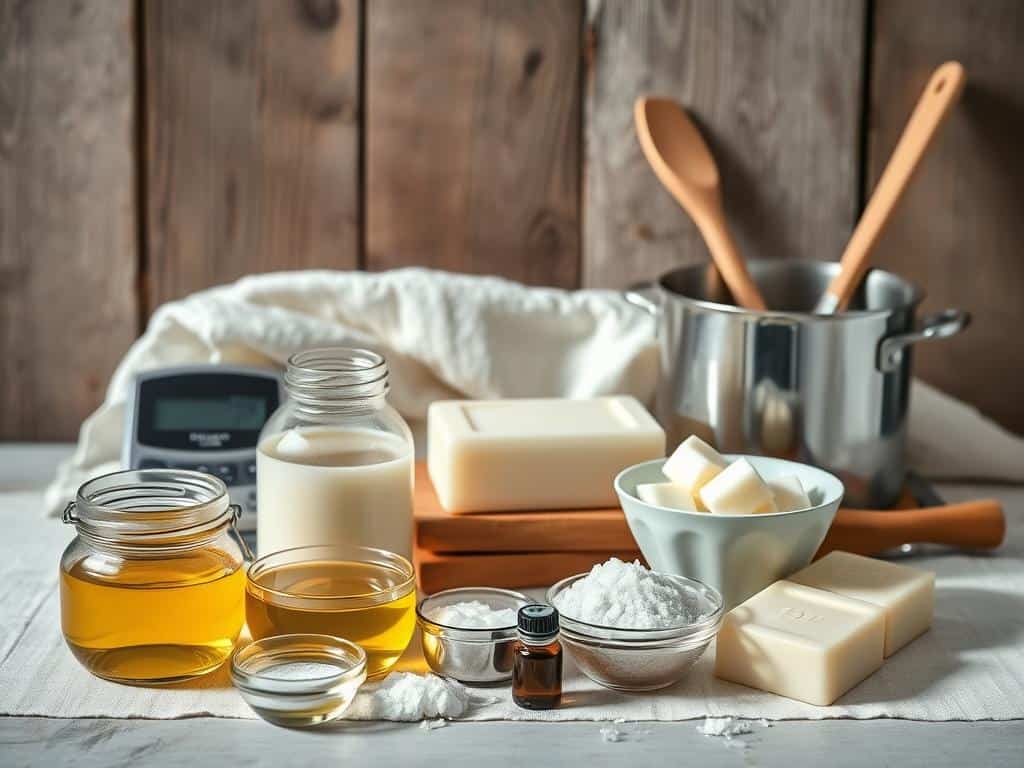
The right tools are essential for soap making. You’ll need a digital scale for precise measurements and thermometers to check temperatures. An immersion blender makes mixing easier, while safety goggles and gloves protect you.
Other important tools include silicone molds for pouring, a soap cutter for bar sizes, and mixers for blending ingredients. Good equipment makes the soap-making process smoother and helps create effective soaps for your skin.
Step-by-Step Process to Create Handmade Soap
Making handmade soap is fun and rewarding. It starts with making the lye solution. This step is key for making good cold process soap.
Preparing the Lye Solution
First, make sure you’re safe. Wear gloves and goggles. Measure 473 grams of sodium hydroxide and set it aside.
In a heat-proof glass bowl, measure 3 pounds of distilled water. Slowly mix the lye into the water while stirring. This makes the lye solution, which needs to cool to 80°F before you go on.
Mixing Oils and Combining Ingredients
While the lye solution cools, get the oils ready. Mix 4 pounds of olive oil, 2 pounds 8 ounces of coconut oil, and 1 pound 8 ounces of palm oil in a big pot. Heat the oil mix to 80°F.
Once both are at the right temperature, mix them together. Use an immersion blender until it’s like pudding. If you want, add essential oils for scent and stir gently.
Pouring and Curing Your Soap
After mixing, pour the soap into your molds. Cover them with blankets or towels. Let it sit for 24 hours without moving it.
After 24 hours, take the soap out of the molds and cut it into bars. The last step is to cure the soap bars for 4 to 6 weeks. This lets them become mild and ready to use.
Conclusion
Starting my soap-making journey has been incredibly rewarding. It combines creativity with the practicality of making my own skincare. Making homemade soap is more than just mixing ingredients. It’s about using natural oils and plants that are good for my skin.
As I try out different fragrances and colors, each soap bar becomes a piece of me. It shows my unique vision. This journey shows how traditional soap-making is coming back. It mixes aromatic oils with the healing power of plants.
This trend towards natural skincare is exciting. Many artisanal soaps avoid harsh chemicals found in commercial products. This is great for people with sensitive skin, like me.
My handmade soaps are not just for me. They make wonderful gifts for my loved ones. I can make them to fit specific skin needs or tastes. Making my own soap lets me control my skincare choices. It also adds a special touch to my daily self-care routines.

Leave a Reply
You must be logged in to post a comment.