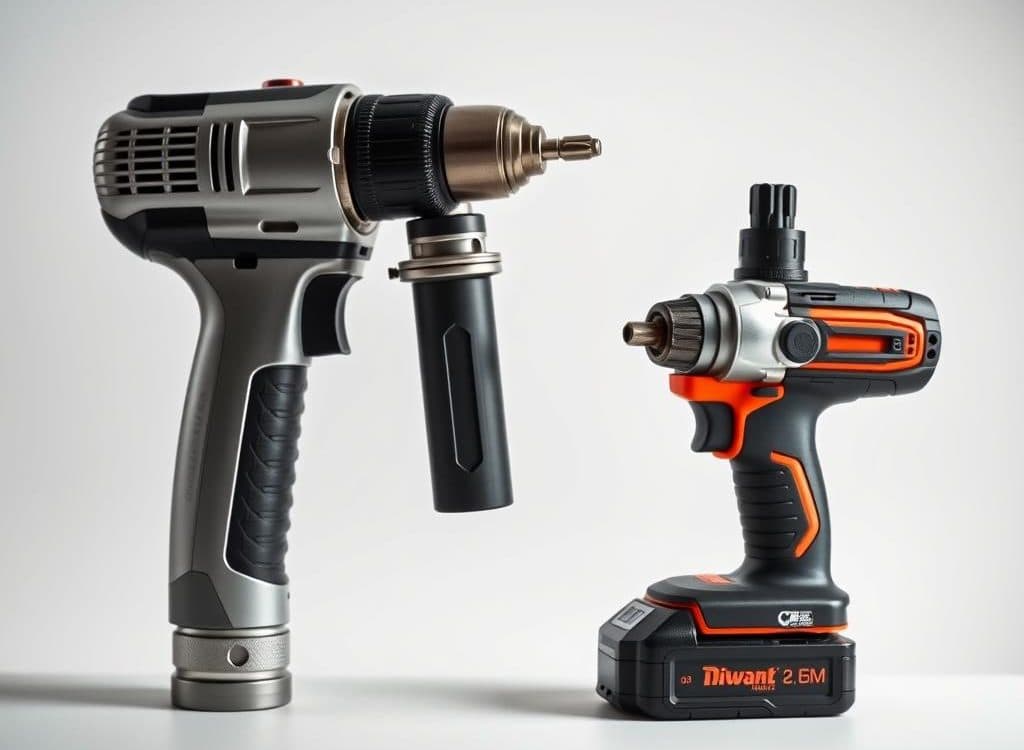
Drill vs. Impact Driver – Which One Should You Buy?
When I started my DIY journey, I had to choose between a drill and an impact driver. I was in a hardware store, surrounded by many tools, feeling lost. I wanted to put up a new bookshelf and finish other home projects.
I had heard that impact drivers are great for driving screws. Drills, on the other hand, are versatile for many tasks. This choice is a common problem for DIY fans, as both tools have their own strengths.
It’s important to know the differences between drills and impact drivers. This knowledge helps you choose the right tool for your projects. Let’s explore what each tool offers, so you can make a confident choice.
Key Takeaways
- Drills are versatile for drilling holes in softer materials and light fastening tasks.
- Impact drivers excel in providing high torque for driving large screws and bolts.
- Understanding the intended use can significantly influence your purchasing decision.
- Hammer drills offer a hammering option for tough materials like concrete but are less suited for lighter tasks.
- Choosing the right tool can enhance both efficiency and ease during home projects.
Understanding the Basics of Drills
Starting a DIY project means knowing how to use drills. Drills are key tools for making holes and driving screws. Knowing the types of drills helps you choose the right one for your task.
What is a Drill?
A drill is a power tool for drilling holes and driving screws. It works on wood, metal, and plastic. You can find drills that plug into the wall or ones that don’t need a cord.
Drills use torque to turn the bit. You need to press down to control the drill. This can be tiring, but drills are great for precise work, like with drywall.
Knowing the types of drills helps you pick the best one. You might need a simple drill/driver or a heavy-duty hammer drill for harder tasks.
Key Features of Drills
Many drills have adjustable-speed tools, making them more versatile. This feature is handy for working with different materials. Drills also have keyless chucks for secure bit handling and reverse functions for removing screws.
Cordless drills are great for moving around. For bigger DIY projects, look for drills with extra features like on-board lighting or smart technology. These can make your work easier and more efficient.
Exploring Impact Drivers
Impact drivers are key for construction and woodworking pros. They’re power tools made for driving screws and fasteners into different materials. With their rotary motion and concussive blows, they offer high torque. This makes them perfect for long screws in hardwood or metal.
What are Impact Drivers?
These tools have a 1/4-inch hex bit holder for easy bit changes. The quick-release chuck saves time, which is great in fast work settings. Their small size also helps them fit into tight spots, making them handy in tight areas.
Mechanism of Impact Drivers
The impact mechanism of these tools adds extra power. This lets users drive screws deeper into materials easily. They’re not just for screws; they can also drill pilot holes and assemble furniture.
Using them reduces wrist and arm strain. This means you can work longer without getting tired. For example, the Milwaukee M18 Impact Driver is known for its speed and torque. It’s a top pick for professionals.
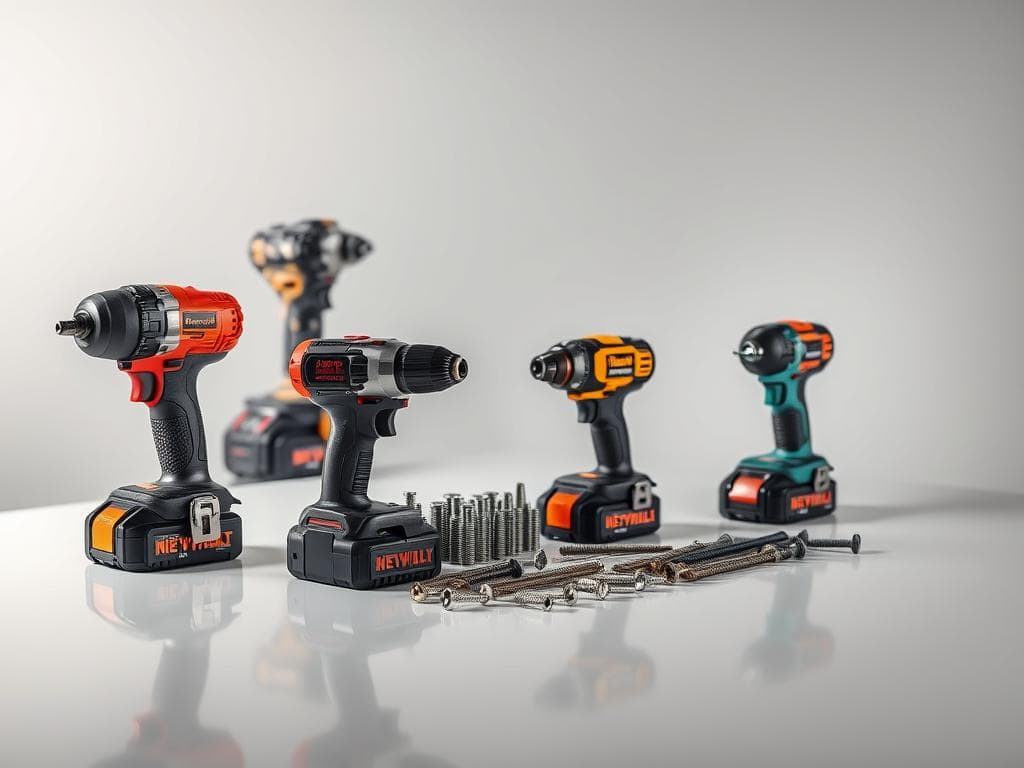
Comparing the Two Tools: Drill vs. Impact Driver
Knowing how drills and impact drivers work helps me tackle tasks better. Each tool is great for different jobs. It’s key to know which tool to use for a project.
Usage Scenarios for Drills
Drills are perfect for drilling projects needing precision. They’re great for making holes in glass and tile without damage. For small screws, drills control speed well to avoid stripping.
Drills come with many specialized bits. This makes them versatile for tasks needing accuracy. For big fasteners, pre-drilling helps avoid misalignment and stripping.
Uses for Impact Drivers
Impact drivers are top for heavy-duty tasks. They have high torque for long screws and tough fasteners. Most have 12, 18, or 20 volt batteries, with higher voltages for more power.
Their brushless motors are efficient and cool. This makes them great for long use. You can adjust speed for different tasks. Brands like DeWalt, Milwaukee, and Makita offer reliable options.
Interestingly, impact drivers can also drill when using the right bits. This shows their versatility.
Conclusion
Choosing between drills and impact drivers depends on my project needs. Drills are great for general tasks and many DIY projects. They offer the precision needed for detailed work and are safe for composite materials.
Impact drivers are best for heavy-duty tasks. They have high torque, perfect for driving screws and bolts into hard materials. But, they should not be used on metal and composite materials to avoid damage.
If I can afford it, getting both tools in a combo kit is best. This way, I can handle a wide range of projects easily. The right tools make my work more efficient and ensure quality results, whether it’s small details or big jobs.

Leave a Reply
You must be logged in to post a comment.