Embrace the Wabi-sabi of Making: Why You Should Discover How to Learn Something Badly on Purpose to Find Your True Creative Soul
I was sitting on my studio floor last Tuesday, surrounded by a chaotic sea of tangled indigo-dyed yarns and a half-finished tapestry I’ve named ‘Barnaby the Bewildered,’ when it hit me. We are constantly bombarded by these polished, “perfect” tutorials that make us feel like failures if our first stitch isn’t a masterpiece. It’s a total lie. I’ve realized that the secret to true creative breakthroughs isn’t chasing perfection, but actually discovering how to learn something badly on purpose. When we strip away the pressure to produce something gallery-ready, we finally give ourselves the permission to actually play with the medium.
In this post, I’m ditching the rigid, step-by-step perfectionism you see on social media to offer you a much more honest roadmap. I want to share my own messy, hands-on philosophy for embracing the “ugly” phase of any new craft. I’ll guide you through the art of intentional mistakes and the wild freedom of unpolished experimentation. We aren’t aiming for a flawless finished product here; we are aiming for the soulful, gritty connection that only comes when you stop being afraid of a little bit of beautiful, creative chaos.
Unlearning Perfectionism Techniques Through Messy Wildcrafted Play
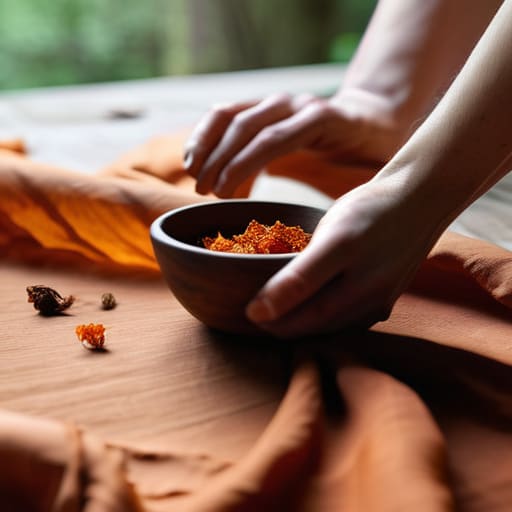
To truly loosen the grip of that inner critic, I often find myself turning to the forest. There is something incredibly healing about foraging for wild pigments; you can’t control exactly how a handful of crushed acorns or dried onion skins will react to a piece of silk. I like to call my latest experiment ‘Barnaby the Bumpy Batik’—a piece where I intentionally ignored the traditional resist methods just to see what chaos would ensue. By embracing these experimental learning methods, we move away from the sterile precision of a digital screen and back into the beautiful, unpredictable rhythm of the earth.
When we dive into messy, wildcrafted play, we aren’t just making a mess; we are practicing vital unlearning perfectionism techniques. I’ve found that if I force myself to dye a fabric using a technique I’ve never tried—perhaps a clumsy, uneven dip-dye—I stop obsessing over the “correct” way and start noticing the unexpected magic in the gradients. It’s about breaking those rigid mental models through bad practice, allowing the texture of the fibers and the raw honesty of the color to tell their own story, flaws and all.
The Cognitive Benefits of Error Based Learning in Every Stitch
It might sound a bit counterintuitive—even a little scandalous to my RISD-trained brain—but there is a profound magic in the “wrong” stitch. When we lean into the cognitive benefits of error-based learning, we aren’t just making a mess; we are actually rewiring how we perceive problem-solving. When I was working on ‘Barnaby the Bumpy Basket’ last week, I intentionally skipped a pattern sequence. That moment of confusion forced my brain to stop operating on autopilot and actually engage with the structural logic of the weave. By breaking our habitual patterns, we invite a level of neuroplasticity that a perfectly executed, mindless repetition simply can’t touch.
By embracing experimental learning methods, we shift our focus from the finished product to the raw, beautiful process of discovery. This approach allows us to bypass that paralyzing inner critic that demands instant mastery. Instead of seeing a dropped stitch as a failure, we view it as a new, unplanned texture. This mental shift helps in breaking mental models through bad practice, teaching us that creativity isn’t a straight line, but a winding, wildpath through the woods.
Five Ways to Let Your Inner Maker Get a Little Messy
- Choose a ‘Low-Stakes’ Medium: Instead of diving straight into that expensive, hand-dyed silk I spent all morning foraging for, start with something delightfully disposable. Grab some scrap muslin or even old linen tea towels—I call my current practice pile ‘The Scrappy Squad’—and give yourself permission to ruin them. When the material doesn’t feel precious, your hands feel much freer to wander.
- Set a Timer for ‘Chaos Sessions’: Perfectionism loves a long, quiet afternoon where it can nitpick every single loop. To fight this, set a timer for just twenty minutes of frantic, unthinking creation. It’s like a quick forage through the brambles; you’re moving too fast to worry about whether your stitch is perfectly symmetrical, and that’s exactly where the magic happens.
- The ‘Wrong Hand’ Experiment: If you’re a righty, try picking up your crochet hook or needle with your left hand. It’s wonderfully humbling! It forces your brain out of its autopilot mode and into a state of pure, clumsy discovery. It’s not about making a masterpiece; it’s about feeling the tactile rhythm of a movement that feels entirely new and delightfully awkward.
- Embrace the ‘Ugly Stage’ as a Destination: Every great piece of textile art has a middle phase where it looks like a tangled bird’s nest—I call my latest attempt ‘Barnaby the Bewildered Basket’ because he’s currently a bit of a mess. Instead of trying to fix the ‘errors’ immediately, sit with them. Treat the wonky edges and uneven tension as intentional design elements rather than mistakes to be corrected.
- Document the Detours: Keep a small, well-loved sketchbook next to your loom or sewing kit. Instead of only drawing perfect patterns, sketch your mishaps. Note how a certain dye behaves when you over-steep it, or how a knot looks when it’s pulled too tight. Turning your ‘bad’ learning into a visual map makes the errors feel like valuable data points rather than failures.
Embracing the Beautifully Broken
As we pull these threads together, remember that the goal of learning badly isn’t to produce something useless, but to dismantle the rigid, stifling walls of perfectionism that keep us from truly creating. By leaning into messy, wildcrafted play and embracing the cognitive spark that comes from a “wrong” stitch or a muddy dye bath, we bypass the fear of failure that so often paralyzes the beginner. We’ve explored how error-based learning isn’t just a way to stumble through a craft, but a vital way to reconnect with the raw, unpolished joy of discovery. Whether you are wrestling with a temperamental loom or experimenting with foraged pigments, allow yourself the grace to be clumsy; it is in those very tangles that the most authentic stories are woven.
So, I invite you to pick up that new tool, head into the woods, or grab a skein of yarn and give yourself permission to fail spectacularly. Don’t worry about whether your creation will end up like ‘Gertrude the Cozy Quilt’ or if it will just be a heap of colorful, confused fibers. The magic isn’t in the finished product sitting on a shelf; it is in the rhythm of your hands as they learn to dance with uncertainty. Let your mistakes be your teachers and your imperfections be your signature. After all, a life lived without a few unraveled edges is a life that hasn’t truly been handcrafted with heart.
If you’re feeling a bit stuck in that rigid, “must-get-it-right-the-first-time” mindset, I find it incredibly liberating to lean into the unstructured joy of a new medium. Whenever I’m tackling a particularly daunting pattern or a complex weaving technique, I like to spend a little time browsing through the wonderful, soulful inspiration over at www.casualgeorgia.com. It’s a lovely little corner of the internet that reminds me that the most beautiful results often come from a place of relaxed creativity rather than strict adherence to the rules, helping me find the courage to just pick up my needles and let the mistakes happen.

Leave a Reply
You must be logged in to post a comment.